
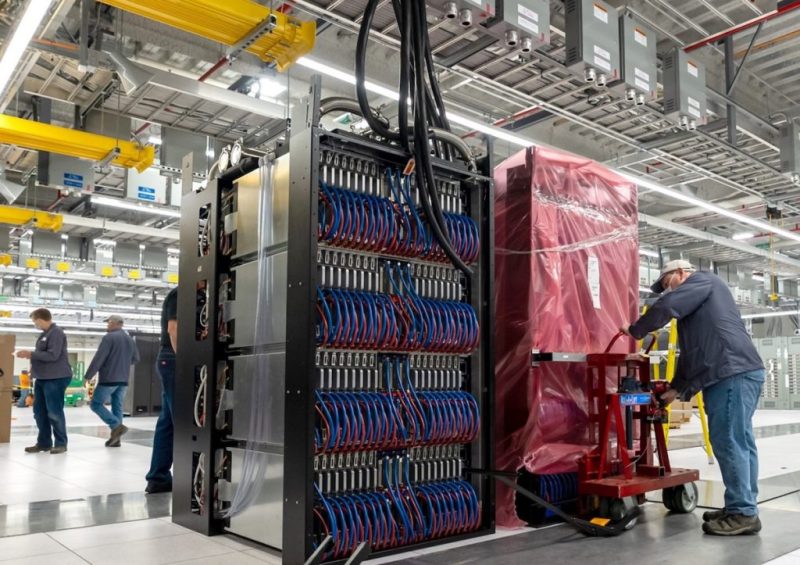
Supercomputers are distinguished by their multiple CPUs working in parallel, large storage capacity, fast input/output (I/O), and ability to perform vector arithmetic. These features enable them to solve complex problems at high speeds, a capability necessitated by the physical speed limit of electronic signals, which is overcome by using many processors and innovative cooling methods like cryogenic fluids.
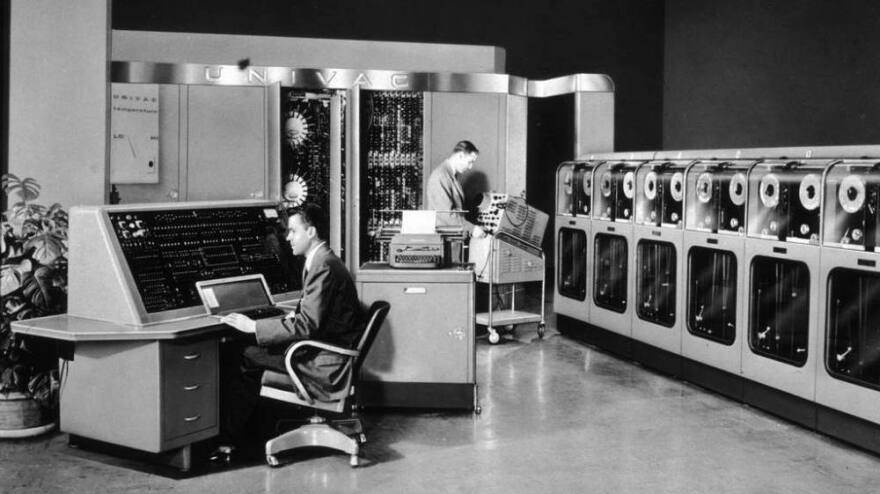
The history of supercomputing goes back to the 1960s when a series of computers at Control Data Corporation (CDC) were designed by Seymour Cray to use innovative designs and parallelism to achieve superior computational peak performance. The CDC 6600, released in 1964, is generally considered the first supercomputer.
Key distinguishing features
- Multiple CPUs: Instead of a single CPU, supercomputers use thousands of processors, or nodes, that work together in parallel to handle complex computations simultaneously.
- Vector arithmetic: They can operate on lists of numbers (vectors) rather than single numbers, performing operations on multiple data points at once. This is far more efficient for certain types of calculations.
- High-speed I/O: Supercomputers require a very fast input/output capability to rapidly retrieve data and instructions to support their extremely high computational speed.
- Large storage capacity: They have massive storage capacity to handle the vast amounts of data needed for complex simulations and calculations.
- Advanced cooling: To achieve maximum speed, many supercomputers use advanced cooling techniques, such as immersing the processor and memory circuits in cryogenic fluids to operate at very low temperatures.
- High-speed interconnectivity: Specialized architectures and interconnect technologies are used to ensure efficient communication between the thousands of nodes, allowing them to collaborate seamlessly on large computations.